Table of Contents
Most tree failures feel sudden, but the tree usually gave hints for weeks or months beforehand. A new lean, a crack in the trunk, a limb that looks wrong after a windstorm. Western New York’s snow, ice, and gusty weather make those weak spots even riskier. In this guide, Riverside Tree Service shares the warning signs that call for Emergency Tree Service, what you can safely do while you wait, and how to pick a company you can trust when time matters.
When Is a Tree Problem a True Emergency?
Not every issue needs a midnight phone call. A dead branch high in a tree can usually wait for a regular appointment. Emergency Tree Service is for situations where a tree or limb threatens people, homes, vehicles, or utility lines right now. If you are unsure, ask yourself one question: could this fall soon onto something or someone? If the answer is yes or maybe, call a professional.
Warning Signs You Should Never Ignore
Take a walk around your yard, especially after storms. Watch for these red flags:
- A tree that has started leaning, or is leaning more than before
- Soil cracking or lifting near the base, which can mean the roots are failing
- Deep splits or cracks in the trunk or at branch joints
- Large broken limbs hanging in the canopy
- Branches touching or tangled in power lines
- A tree that has already fallen onto a house, fence, car, or driveway
- Sudden loss of bark or large dead sections
- Mushrooms or fungus at the base, which often point to internal decay
- Hollow or crumbling wood you can see or feel
Any one of these is worth taking seriously. Two or more together should push you to call right away.
How Urgent Is It?
| Warning Sign | Urgency | What to Do |
|---|---|---|
| Tree on a house or vehicle | Immediate | Stay clear and call for Emergency Tree Service |
| Limbs touching power lines | Immediate | Keep far away, call the utility and a professional |
| Sudden lean with lifted roots | High | Keep people away and request an inspection |
| Large trunk cracks | High | Schedule an assessment as soon as possible |
| Hanging broken limbs | High | Stay out from under them and call for help |
| Fungus at the base | Moderate | Book an arborist evaluation soon |
| Dead branches over the yard | Moderate | Plan trimming before the next storm |
Why Buffalo Weather Raises the Stakes
Wet, heavy snow can load a single branch with a surprising amount of weight. Ice makes limbs brittle, and lake winds can finish the job in seconds. A tree that held up fine in October may struggle in a November storm if it already has a hidden weakness. Many homeowners end up searching for Emergency Tree Service only after something has fallen, when crews are busiest and roads are slick. Spotting the signs early gives you more choices and a calmer experience.
What to Do While You Wait for Help
Safety comes first. Until a crew arrives, follow these steps:
- Keep everyone, including pets, well away from the tree
- Stay out of any room or vehicle that could be hit if it falls
- Treat every downed wire as live, and keep a safe distance
- Call your utility company if lines are involved
- Take photos from a safe distance for insurance
- Contact a licensed company that offers Emergency Tree Service
What Not to Do
Many injuries happen when people try to be heroes. Please avoid:
- Cutting a leaning or tangled tree with a chainsaw
- Climbing a damaged tree or putting a ladder against it
- Pulling on branches caught in wires
- Standing under a hanging limb to “see how bad it is”
- Hiring door-to-door crews who want full payment before they start
Emergency vs. Scheduled Service
| Factor | Emergency Tree Service | Scheduled Tree Work |
|---|---|---|
| Timing | Immediate or same day when possible | Planned in advance |
| Goal | Make the area safe | Improve health or appearance |
| Cost | Often higher due to urgency | Usually more predictable |
| Equipment | May need extra gear | Planned ahead |
| Best for | Fallen or failing trees | Pruning, inspections, planned removal |
How to Choose a Company in a Hurry
Emergencies make people rush, and some unqualified operators take advantage. Before you agree to anything, check:
- Proof of liability insurance and workers’ compensation
- Trained crews with proper climbing and rigging equipment
- A clear, written estimate, even a brief one
- Local reviews or references
- A company name on trucks and paperwork
Be cautious of anyone who knocks on your door after a storm, demands full payment up front, or refuses to explain the plan. A trustworthy provider of Emergency Tree Service will answer questions openly, even when the clock is ticking.
What a Professional Response Looks Like
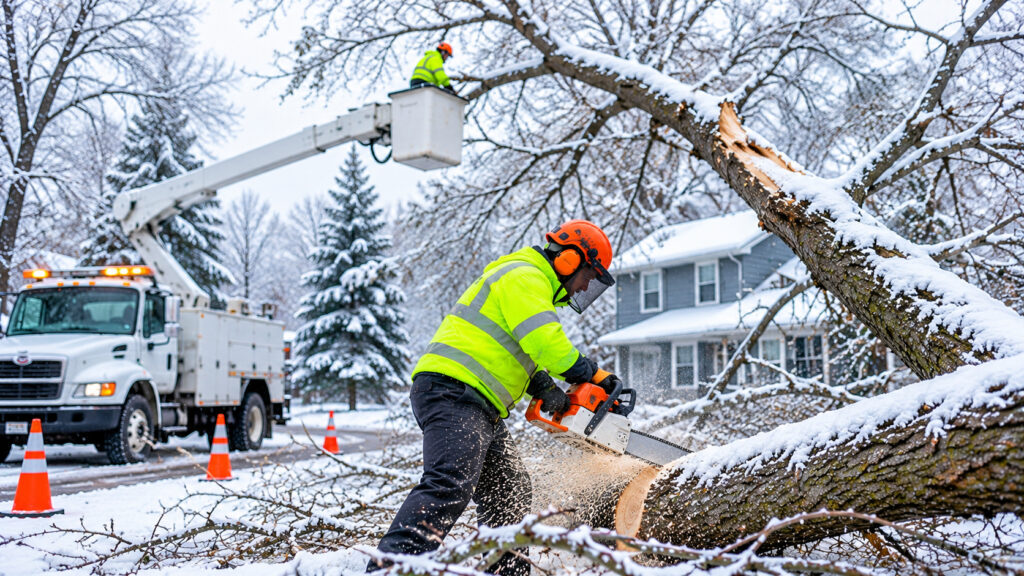
A well-run emergency call usually goes like this:
- Assessment. The crew checks the tree, the surroundings, and any hazards.
- Safety setup. The work area is secured and bystanders are moved back.
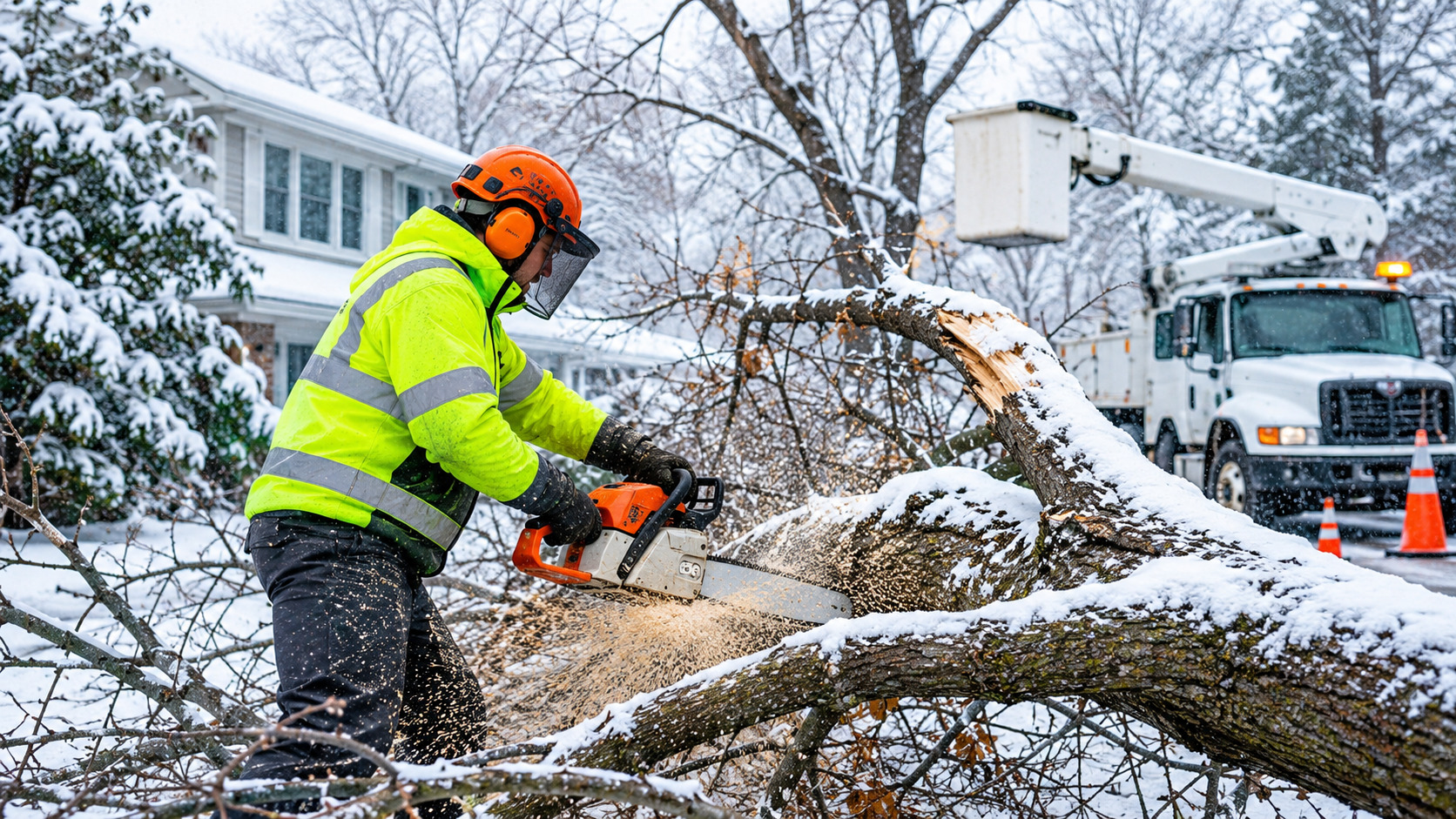
- Stabilizing or removal. Limbs are cut in controlled sections, or the tree is taken down safely.
- Cleanup. Branches and debris are cleared so the area is usable again.
- Follow-up advice. You get recommendations for repairs, pruning, or replanting.
Speed matters, but so does doing the job right. A good crew balances both.
Preventing the Next Emergency
The cheapest emergency is the one that never happens. A fall inspection lets an arborist spot weak limbs, disease, and structural problems while the weather is still mild. Depending on what they find, the fix might be pruning, cabling, or removal. A simple pre-winter routine looks like this:
- Prune dead or crossing branches
- Check trees near the roof, garage, and power lines
- Revisit trees damaged in earlier storms
- Remove trees that are dead or structurally unsound
- Keep debris and brush from piling up around trunks
Insurance and Paperwork
Coverage varies from policy to policy. Many homeowners policies help when a tree damages a covered structure, but the details differ. Take clear photos, keep your estimate and receipts, and call your insurance provider early to ask what applies. If a tree falls on a neighbor’s property, talk with your insurer about who is responsible.
Why Homeowners Choose Riverside Tree Service
Riverside Tree Service works with Western New York homeowners through every season, from routine pruning to storm response. Our crews are trained, insured, and used to local winter conditions. When you need Emergency Tree Service, we explain what we see, outline your options, and work to make the area safe as quickly as conditions allow. We will also tell you honestly if a tree can be saved.
Frequently Asked Questions
What counts as Emergency Tree Service?
It is urgent help for trees that threaten people or property, such as fallen trees, hanging limbs, or trees leaning toward a home. It usually includes rapid assessment, safe removal, and cleanup.
When should I call for Emergency Tree Service?
Call as soon as a tree falls on a structure, blocks a driveway or road, touches power lines, or shows sudden leaning or cracking. If you are not sure, a quick call is better than waiting.
Does Emergency Tree Service cost more?
It can, since urgent jobs often involve difficult conditions, extra equipment, or after-hours response. Pricing depends on the tree’s size, location, and risks. Ask for a written estimate whenever possible.
Will insurance cover tree damage?
It depends on your policy. Take photos, keep records, and contact your provider to confirm what applies.
Can I prevent a tree emergency?
Often, yes. Regular inspections, pruning, and timely removal of unhealthy trees lower your risk significantly, especially before winter.
Final Thoughts
Trees rarely fail without dropping hints first. Learn the warning signs, check your yard after every big storm, and do not talk yourself out of a bad feeling. If something looks wrong, contact Riverside Tree Service for an inspection or a fast response. When you need Emergency Tree Service, we are ready to help you get safe and get back to normal.